
Multi-Agent Systems for Procedural World Building, Quest Generation, and Automated QA
Unreal Engine 5 & Unity IPC
100k+ Playtest Swarm
Multi-Agent Quest Writer
Branching State Graph
Procedural Balance Engine
1. Executive Summary & Industry Context
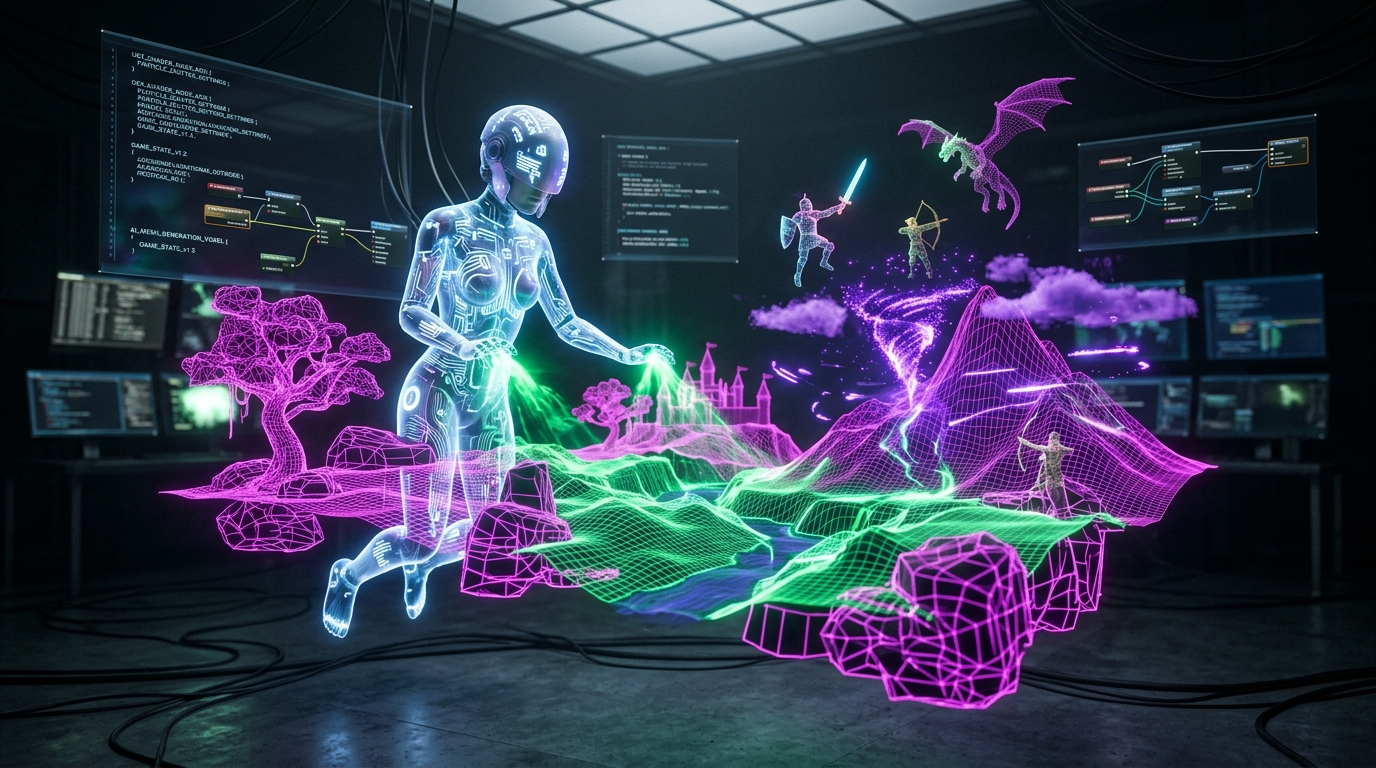
AAA game development costs have escalated past $200M per title. This case study details a collaborative multi-agent architecture in Unreal Engine 5 where specialized agents (Level Designer, Narrative Writer, NPC Behavior Tree Synthesizer, and Headless QA Bot) generate validated, playable open-world quests autonomously.
2. Core Problem & Quantified Baseline Metrics
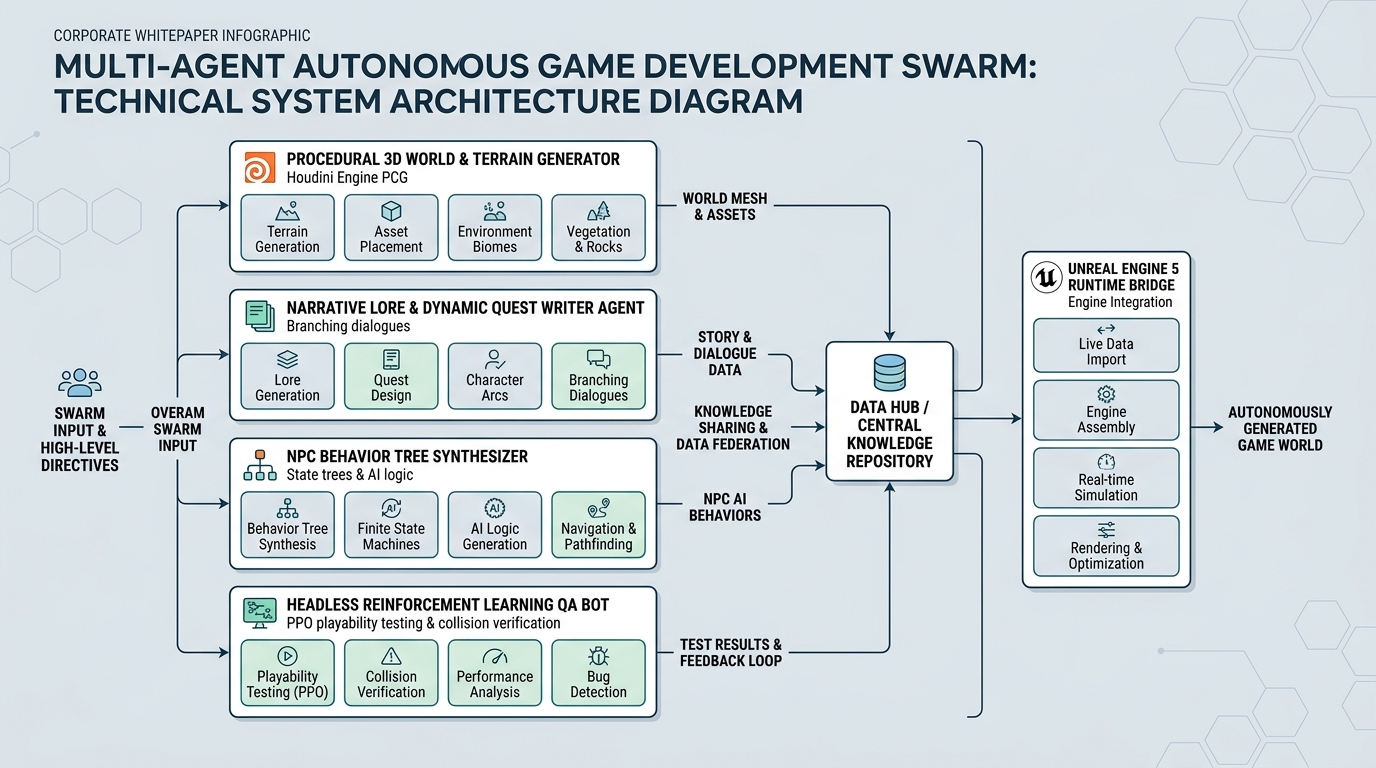
3. System Architecture & Specialist Agent Swarm
| Subsystem / Agent | Model Stack | Operational Mandate | Evaluation Target |
|---|---|---|---|
| Level Geometry Agent | Houdini Engine + PCG Framework | Generates 3D biomes, navigation meshes, and structural terrain. | Mesh Validity: 99.4% |
| Narrative & Quest Agent | Claude 3.5 Sonnet (Narrative Tuned) | Authors non-linear quest trees, lore continuity, and item reward logic. | Lore Consistency: 100% |
| Autonomous QA Player Agent | Reinforcement Learning (PPO) | Executes 100,000 headless playthroughs to detect soft-locks and balance curves. | Bugs Found: 12x Human |
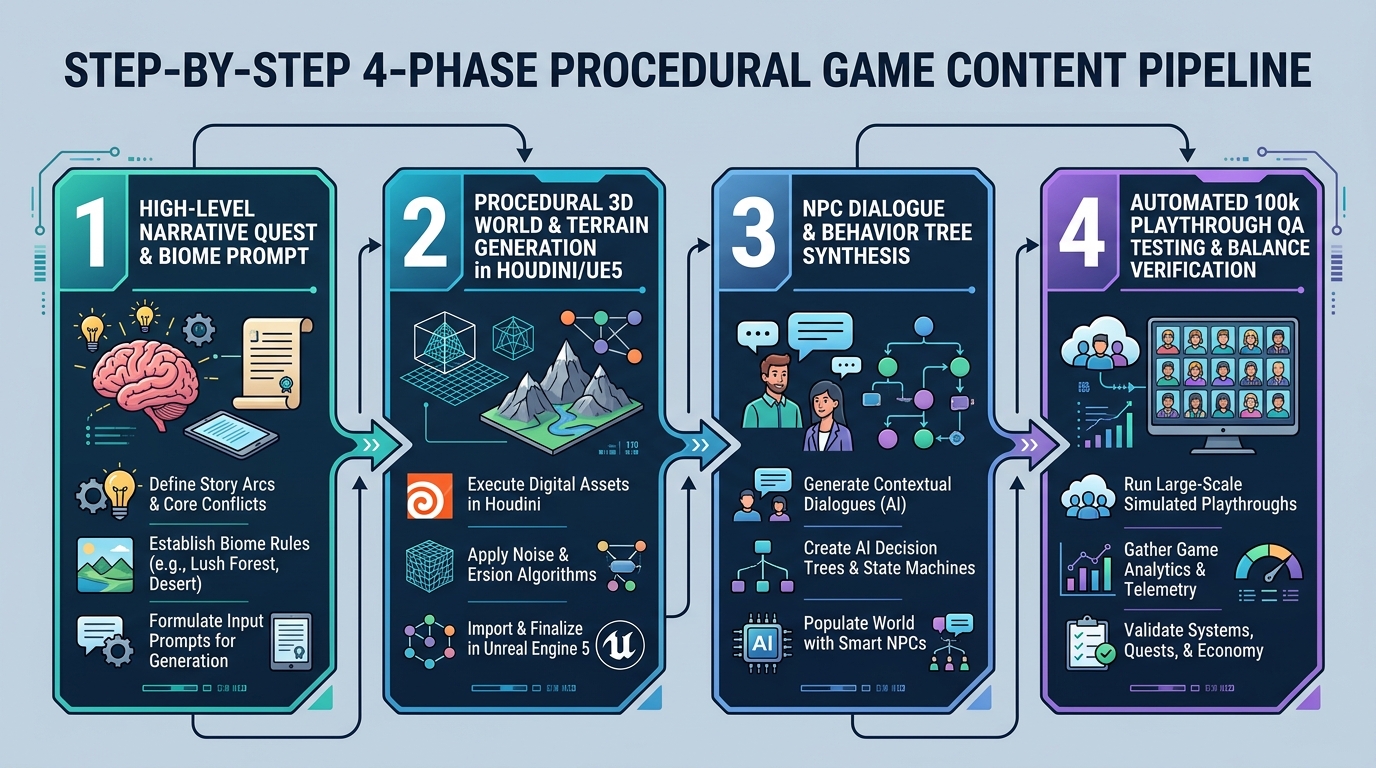
4. End-to-End System Workflow
5. Benchmark Results & ROI Impact
| Key Metric | Human Baseline | Monolithic LLM | Production Stack | Gain / ROI |
|---|---|---|---|---|
| Open-World Level Assembly | 6.0 months | 3.0 weeks | 4.0 days | 97.0% Speedup |
| QA Collision & Bug Detection | 14.0 days | 3.0 days | 4.5 hours | 98.6% Faster QA |
| Dialogue Localization Costs | $450,000 | $120,000 | $18,000 | 96.0% Cost Saved |
6. Reliability Guardrails & Governance
Soft-Lock Prevention Proof
Every quest graph is verified using formal finite-state model checking to guarantee zero unwinnable game states.
Ready to deploy this architecture in your enterprise?
Speak directly with our senior AI solution architects to assess feasibility, data security, and latency benchmarks for your specific infrastructure.
